Being a photographer, my eyesight is a given and something I take for granted. Without it, I would unlikely be a photographer. But how I see things isn't just down to my eyesight. My 'eye' is how I see things and how I frame things.
0 Comments
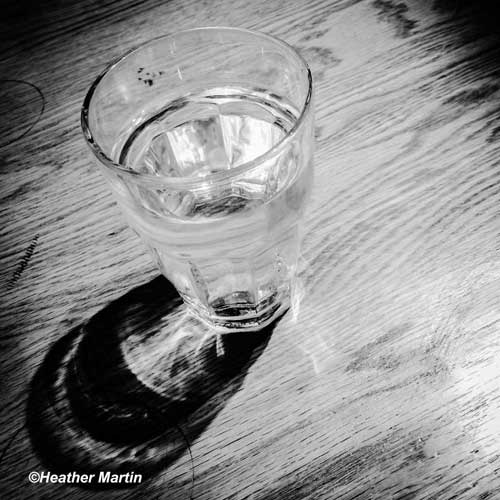 While putting together a couple of photo books of my photos, I decided to get involved with a photo exhibition with a photography group I'm involved with. The theme for the exhibition is 'Here'. While both books were already taking shape, the exhibition theme helped to focus them.
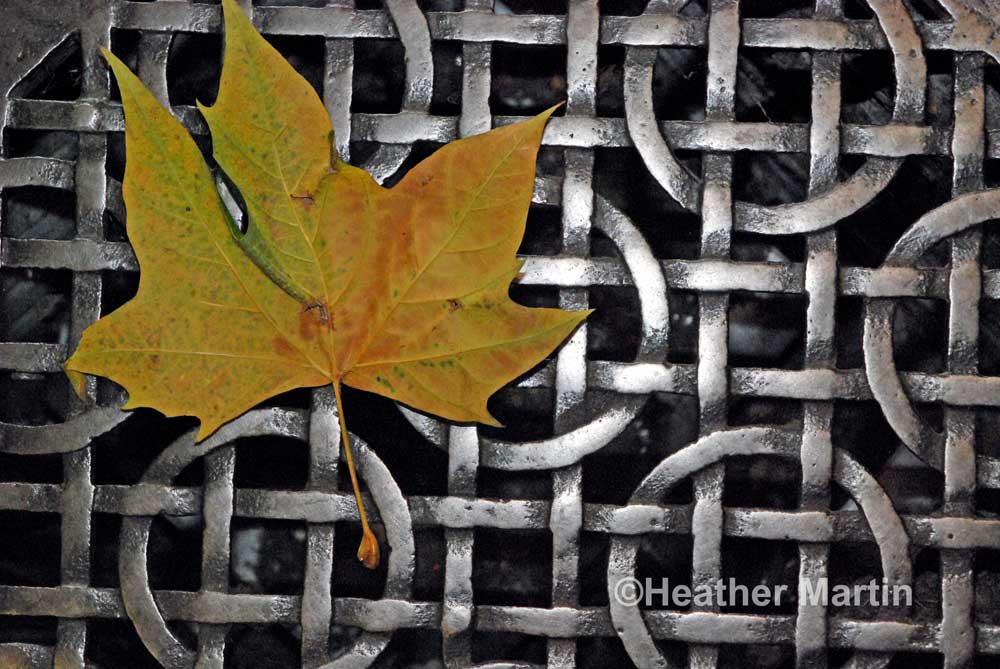 Recently, I was taking photos at a charity event for the Robes Project, a charity which supports homeless people in London.
After months of struggling with my photography – feeling a bit directionless, and even suffering from the photographer’s version of writer’s block – it was nice to have something to focus on. It’s a charity I have worked with over the years, and I feel fortunate to be involved with them. Not only are they supporting the most vulnerable in society, it has recently helped me to reconnect with my photography. The fundraising event was in Southwark Cathedral, a building I enjoy photographing. In the few still moments, I noticed the leaves that were blown into the Cathedral. The leaves captivated me. There was a lightness to the leaves – of allowing the winds to take them wherever and not having an agenda; a sense of being free and unstuck. I have felt very stuck with my photography, and it’s very frustrating At the fundraising event, the leaves reminded me to let things go and not force things. When I was touching up the photos from the event, I realised that this year hasn’t been entirely unproductive. I have had some commissions; been able to take some beautiful landscape photos of Yorkshire; and I have started scanning some of my historical photos I haven’t looked at in years. What occurred to me is to find new places to photograph as well as appreciate and revisit the photographs I have already taken. I am looking to put together some books based on my photographs so far, which excites me. So, perhaps I am finding ways to be a little less stuck. 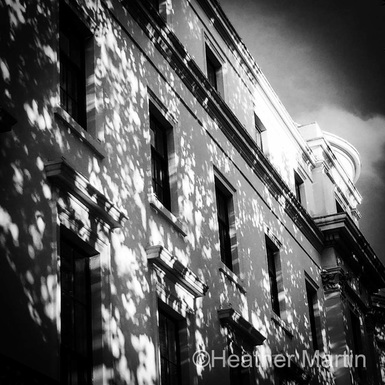 I haven’t blogged in quite a long time about my photography. I must admit, that I have struggled to put pen to paper to talk about it.
What drives me to take a photograph? What is it that catches my eye? Why is it that sometimes I struggle to see any photograph at all? How on earth do I describe something beyond words? It’s difficult. And I have found I have had writers block to describe my photos. As this has happened, I have felt less pressured to take photos and try to put into words what I see. I have also found that there is a natural rhythm in my photos but also when and the frequency of taking them. There is a photographic voice, but the written voice seemed to need to have a rest. Words, I find, can be a double edge sword. It can help viewers to understand my motivations around a photograph. However, words can also limit viewers into not exploring what they see in my photos. While my philosophy around photography is to encourage viewers to see their own narrative in my photography (and it’s okay if you don’t or don’t like the image(s)), I am wanting to start blogging more frequently about my photography again. Writing about my processes and my photography has been helpful in the past for me to work through what my creativity means to me. 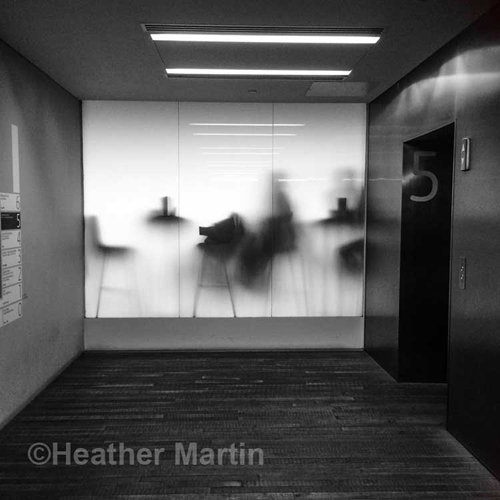 A friend and I recently saw an exhibition on conflict and photography at the Tate Modern gallery in London. It was thought provoking and sombre exhibition. After the exhibition, we had a good catch up over lunch in the Members bar with a beautiful view of the City of London.
When we were waiting for the lift to leave, I snapped the photo of people behind frosted glass, sitting in the Members bar with their drinks and food. It made me reflect on photography, particularly on the exhibition I saw. Photography is so many things and has evolved since its inception. One aspect I am drawn to with photography is that it captures moments in life – impressions of the present. The fleeting moment. The exhibition I had been to was about conflict and the years following. It showed the viewer the impact of war and how things change in the following years. Whatever the subject matter, I often like to go back to places I have been and photograph it again, particularly after a period of time. Places change. People change. The constant in life is change. Photography can capture the impressions of a moment, a part of a story - however fleeting. 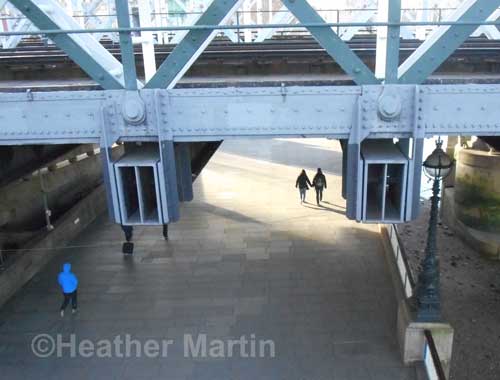
Living in London, I am spoiled for choice for places and buildings to photographs. The diversity of the city – the cultures, the peoples and the architecture – offers a rich tapestry to photograph.
One place I enjoy photographing is the South Bank complex south near Waterloo. The brutalist and modern architecture is a culture hub in London that draws people to it. I enjoy people watching and photograph how people interact within the complex – whether it’s chatting over a drink or kids skateboarding. From time to time, I find myself drawn to South Bank and Waterloo and often I find myself taking photos. With the rebuilding of London Bridge Station, I am finding myself passing through the South Bank more frequently to get to Charing Cross when walking from Waterloo. Today, I was a bit of a rush to get to Charing Cross. I paused when crossing the foot bridge over the Thames and noticed a couple passing along the footpath along the Thames. Fortunately, I had a camera to hand and managed to get the photo. On one level, the photo is also about the architecture of the bridge and the passes underneath – and the sunshine highlighting the couple. On the other, it’s about people’s lives passing each other – sometimes we see this and sometimes we don’t. Without this bridge and underpass, and a bit a of luck, I probably wouldn’t have seen those lives passing underneath the bridge. I started rambling seriously about 5 years ago when I joined an informal rambling group that had been going for about 40 years. The man who had started it was passionate about rambling and knew the South East of England like the back of his hand, and most of the pubs too. The only other time when I walked seriously was when I did a charity walk from London to Canterbury in my mid-twenties – which was an experience in itself as I have never walked so far in my life in one go! My enjoyment of both walking and the countryside has blossomed over the last 5 years, and have also met some remarkable people along the way – whether it’s friends in the group I mainly walk with or other groups or friends I have walked with. The change in landscape and the seasons are a wonderful joy to walk through and have enjoyed the conversations, quiet spaces and the friendships along the way. The only other time I have experienced this was when I used to ride horses growing up, and would love to get back into at some point. I am currently Clare Balding’s new book, Walking Home, and am thoroughly enjoying it. The book also inspired me to trek out on a very overcast and blustery New Year’s Day to walk in the South Norwood Country Park – a favourite haunt of mine if I am feeling the need for a short walk. I have enjoyed this park on many occasions and have enjoyed it in different seasons. Even on a cool winter’s day, it was nice to get out and I enjoyed the muted colours. Although being in London, being in the middle of the park feels like being in the countryside. Also, coming from Canada, I sometimes enjoy a walk on a blustery day – even I don’t enjoy the sometimes crippling cold in Canada. There is something freeing in a walk – like when I used to ride. There is a rhythm in a walk and a chance to stretch the legs and clear the head. I hope to walk as long as some of my friends who ramble. With the clocks turning back last weekend, I have really noticed the days becoming shorter. It reminds me that the autumn is drawing to a close and winter is coming. As I mentioned in my previous post, autumn is my favourite time of year. While the colours in London and the South East tend to be much more muted than Canada, I do enjoy the muted colours and the extravagant bit of colour. One of the many things I enjoy about rambling is I get to enjoy nature and its beauty, particularly during the autumn. I have been rambling recently in Surrey, and the last autumn colour was on show. It was a warm and very sunny day, which made the autumn colours really become vibrant. I feel fortunate to have enjoyed them before they disappear and make way for winter. It is that time of year again where the days are shortening, the light is softening, the air is chillier and the leaves fall. I enjoy autumn and winter for taking photos. What I like is the light and how it seems a bit more reflective. It isn’t has harsh as the summer sun. It’s that in between time between the excitement of summer and the slumber of winter. Since living in London, I really do miss the splendour of the colours in the Canadian autumn. The muted colours in London have their own beauty in their own reserved way. I would love to visit further north – like the Lake District or Scotland to see how the autumn colours compare. I have always loved autumn – for the colours in Canada and the softer light of both Canada and the UK. It is my favourite time of year and hope to photograph it as much as I can this year. I’m currently scanning some photos for a friend of mine who doesn’t have a scanner for photographs. The photos are from about 30 years ago when she travelled extensively throughout the world. As a photographer, I am conscious of stories and trying to capture and convey stories that unfold in front of me. Working through my friend’s slides, her story is starting to unfold to me. I am finding this a very interesting process and am seeing what she saw when she travelled to places I haven’t been. I am also conscious that, as I predominately take photos of architecture and landscapes (both urban and rural), the photos I take give a window to others of what I see, how I see the world around me and places I have been. Whether the viewer has been to places I have been can influence how they see the photos I show. They can invoke memories, curiosity of places they haven’t been and perhaps be challenging. I am also very aware that I live in a city with a lot of history. I work near Tower Bridge and across the river from the Tower of London, and am close to Borough Market. I enjoy photographing all of these sites. When I am in the mood to people watch, Borough Market provides ample opportunity and an interesting back drop. People mingling, the smell of food and the stalls enticing people to buy. Even if you have been before, there are always things to look at and photos to |
AuthorHeather Martin is a London based photographer who specialises in architectural, event and B&W film photography. Archives
August 2016
Categories
All
|
 RSS Feed
